
 Company Introduction
 Our Factory
 Development History
 Company Culture
 Our Certificates
 AUTO RGB Amusement Light
 Programmable RGB Amusement Light
 RGB LED Floodlight
 Single Color Amusement Light
 E10 E14 Turbo Housing
 Accessories
 Application Area
 Products Video
 Enterprise News
 Industry News

Please click on the upper right corner
Share it with your circle of friends
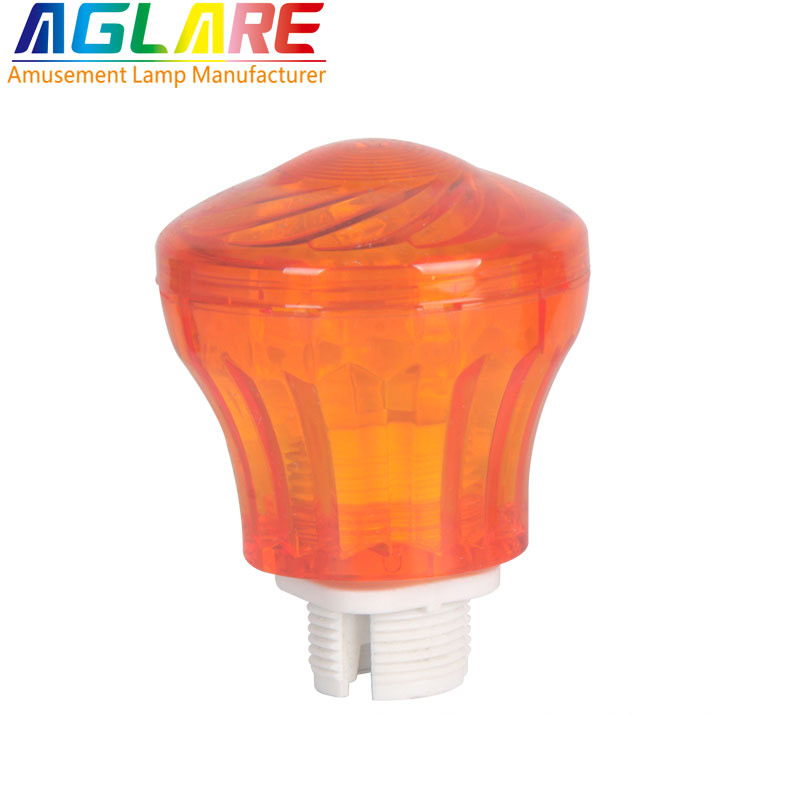
Buying LED pixel lights for amusement park rides is not like buying standard LED bulbs. The specifications that matter — base type, voltage, program type, IP rating, chip construction — are specific to the amusement industry and require careful matching to your ride and operating environment. This step-by-step buying guide ensures you get it right first time.
 |
.jpg) |
Step 1: Identify Your Ride's Socket Type
◉ The first and non-negotiable step is identifying the base type of your existing sockets:
◉ E10 (10mm screw) — measure with calipers or check the rating on a failed bulb
◉ E14 (14mm screw) — the more common modern standard
◉ BA15d (bayonet, 15mm) — some European dodgem cars; requires an adapter to use E14 pixel lights
◉ GU10 / GU5.3 — unusual in fairground context; verify before ordering
Step 2: Confirm Your Supply Voltage
Measure the voltage at the socket with a multimeter (both AC and DC mode). The three options are:
◉ AC24V — transformer-fed, most European rides
◉ DC24V — SMPS-fed, modern installations
◉ DC12V — SMPS-fed, smaller rides and Asian manufacture
Modern 6th-generation pixel lights support all three voltages from a single product. If ordering older-generation products, confirm voltage compatibility explicitly with your supplier.
Step 3: Choose Auto or DMX
Refer to the detailed guide in our "RGB Auto vs DMX512" article. In summary:
◉ Auto — simpler, lower cost, no controller, suitable for most touring and small permanent installations
◉ DMX512 — maximum visual flexibility, show integration, required for synchronized multi-ride installations
Step 4: Select IP Rating
◉ IP65 — minimum for any outdoor ride; protects against rain
◉ IP67 — recommended best practice; protects against immersion (thermal cycling moisture ingress resistance)
◉ IP68 — only required for water feature applications
Step 5: Assess Chip Technology
Ask your supplier directly: "Is this product wire-bond or COB flip-chip construction?"
Wire-bond products are cheaper and adequate for indoor or partially protected applications. For outdoor rides subject to rain, pressure washing, and temperature cycling, COB flip-chip (as used in Aglare's 6th-generation products) delivers dramatically better long-term reliability.
Step 6: Evaluate Color Quality
For RGB pixel lights, request a sample batch and evaluate:
◉ Color saturation: Are reds truly red? Blues deep and vivid? Or washed-out and pale?
◉ Color consistency: Do all bulbs of the same program number look identical when installed side by side?
◉ White quality: Pure white (balanced RGB) vs. greenish or bluish white indicates chip quality issues
Step 7: Verify Certifications
For products entering the EU market, CE and RoHS are legal requirements. Request the actual test reports — not just the CE logo — and verify they reference the correct standards (EN 62031, EN 55015).
For North American installations, UL-listed products are preferred (though not always legally required for amusement ride lighting specifically — check with your local authority).
Step 8: Calculate Quantities and Total Cost
Create a spreadsheet with:
◉ Number of sockets per ride section
◉ Program number assignment per section
◉ Total quantity per program number
◉ Total wattage (to spec power supplies)
◉ Total cost per unit × quantity = budget
Don't forget to include 10-15% extra stock for spares. Ordering spares at the same time as the initial batch ensures perfect color and program matching. Ordering from a different production batch later risks color inconsistency.
Step 9: Order Samples Before Bulk Commitment
Always request minimum 50-100 pieces for evaluation before placing a full order. Your evaluation should include:
◉ Visual comparison side-by-side with any existing lights already on the ride
◉ 48-hour powered operation check (no early failures)
◉ IP test with a garden hose
◉ Chasing effect test with consecutive program numbers installed in sequence
Step 10: Confirm Lead Time and Production Capacity
Ask your supplier: "What is your current production lead time and monthly capacity for this product?"
A reputable manufacturer with genuine production capability will give specific answers (e.g., "Stock available for up to 5,000 pcs; orders above that have 15-day lead time; monthly capacity 300,000 pcs").
Vague answers ("1-2 weeks, no problem") without specifics are a warning sign.
Summary Specification Template
Copy this template into your enquiry email:
Product: LED Pixel Light for Amusement Ride
Base: E14 (or E10 — confirm)
Voltage: AC24V / DC24V / DC12V (confirm which)
Control: Auto-program (specify programs needed: 1-8 / 1-16)
OR DMX512 (confirm addressing range)
IP Rating: IP67 (minimum)
Chip: COB Flip-Chip (6th generation)
Certifications required: CE + RoHS (test reports required)
Quantity: [number by program number]
Dome color: Clear RGB (color changing)
Required: Datasheet with complete specifications
CE test report (full, from accredited lab)
IP67 test report
Sample quantity: 100 pcs for evaluation